
Heartwood Institute re-enchants love with nature through weaving ecology, science and spirituality.
What do you do?
We walk alongside communities to remember our kinship to the Earth through public art, science-led policy, deep nature immersions and supporting Indigenous-led forest hot spot conservation.
Culture change. Embodied living ecology. Reciprocity.
We do this through locally rooted and globally connected initiatives.
Why?
Climate collapse is a crisis of relationship.
If we help people feel their kinship with the Earth — through research, education, storytelling, and supporting Indigenous-led protection efforts — then cultural narratives shift from dominion to belonging, and what we feel intrinsic connection to, we protect.
We see a world of mutual flourishing.
Our Values
When we return to our bodies — to breath, sensation, and the felt sense of being alive — we remember the community of life we belong to. Joy is experienced in the landscape of sensation. Within our breathing bodies.
We are not separate from the teeming, living world. In remembering our belonging, we delight to "give back the gift." Reciprocity is an Indigenous system for living in harmony with all life.
We honor the aliveness and soul spark within the living world. Tree, stone, river, mountain, human alike. We remember that the Earth is alive, has agency, creativity and wisdom. We are the newly arrived.
Like the mycelial networks beneath our feet, we are most ourselves in entangled connection. Our wellbeing is not separate from the wellbeing of the forest, the river, or the soil. What harms one harms all. What heals one opens healing everywhere.
Trees measure their lives in centuries. We practice slowing to their tempo — releasing the urgency of capitalism, the news cycle and the algorithm in favor of deep time, patient growth, and the wisdom of long becoming.
About Our Founder
Dr. Lindsay Branham
Environmental Psychologist · Emmy-Nominated Filmmaker · Author · Eco-Doula
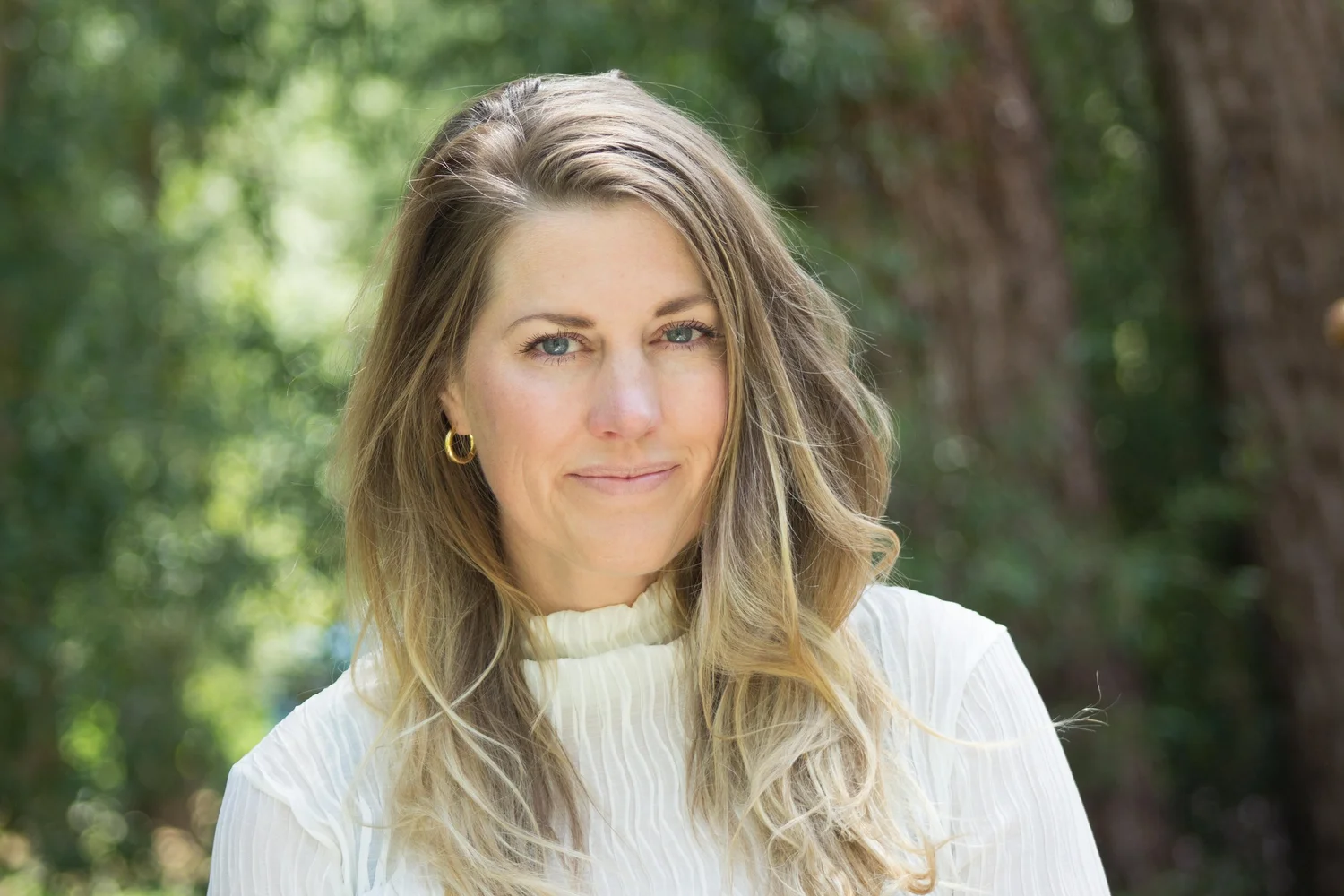
Dr. Lindsay Branham is an environmental psychologist, Emmy-nominated filmmaker and eco-doula. She is the author of Heartwood: The Wisdom and Healing Kinship of Trees (Hachette/2026). Her life’s prayer is to serve the collective remembrance of an erotic and embodied relationship with nature.
Heartwood was praised by Richard Rohr as, “A gift to us all to widen our hearts with more love for this suffering world.” Heartwood invites readers into an embodied, reciprocal relationship with trees to heal our severed connection to ourselves and the Earth, returning home to the living world. Dharma Teacher Brother Spirit at Plum Village Monastery writes that Heartwood “restores our ability to hear and understand the language of the land.”
As a Cambridge Trust Scholar, her PhD research at the University of Cambridge titled “The Body of the World,” pioneered the discovery that interoceptive awareness—our eighth sense—is the key capacity driving an intimate, lasting connection with the Earth that motivates pro-environmental behavior. This finding bridges environmental psychology, embodied cognition, and deep ecology.
Her groundbreaking research on prejudice and virtual reality in Central African Republic won the Sage Publications Paper of the Year award in 2024 and the immersive film Even in The Rain premiered at Venice Biennale.
Lindsay is the founder of Novo Films, a social and environmental impact studio where she has directed 40+ films reaching 200 million people and raised over $80 million for human and environmental rights efforts across 25+ countries, with measurable policy outcomes including the international recognition of the atrocities in Myanmar as genocide. She recently directed Ocean Keepers about innovative nature financing in Belize for The Nature Conservancy, narrated by Meryl Streep. She is currently leading a grassroots effort in the Roaring Fork Valley to pass a Rights of Nature resolution to garner legal standing to the Roaring Fork River and watershed in Pitkin County.
She writes a regular environmental column for The Aspen Times and has been published in The New York Times, The Guardian, and National Geographic. She was recognized by the United Nations and Independent Film Project as the inaugural Social Good Fellow and has been recognized in dozens of awards for excellence in film.
Social and Environmental Impact
Select examples of culture change at scale.
For more, visit the press page.
Knowing that you love the earth changes you, activates you to defend and protect and celebrate. But when you feel that the earth loves you in return, that feeling transforms the relationship from a one-way street into a sacred bond.
- Robin Wall Kimmerer
How You Can Help
This work moves at the pace of relationship. We welcome conversations to nurture slow growth.
Book a keynote
Lindsay speaks on kinship with the living world, interoception, and why belonging to nature is central to meeting climate collapse.
Enquire about speaking →Partner with us
We work with organizations, foundations, research institutions, and land trusts on public art, policy, and research that restores kinship with the living world.
Get in touch →Writing in the Aspen Times
Our Partners